A function is a rule that assigns a unique value to an input .
-7d9efca862cb3a2f3b7ae0614d2331f7.jpg)
We call x the independent variable and the dependent variable. The domain of f is all possible values of x, while the range of f is all possible values of y.
A function can be represented by:
An equation
A table
0 0 1 1 2 4 A graph:
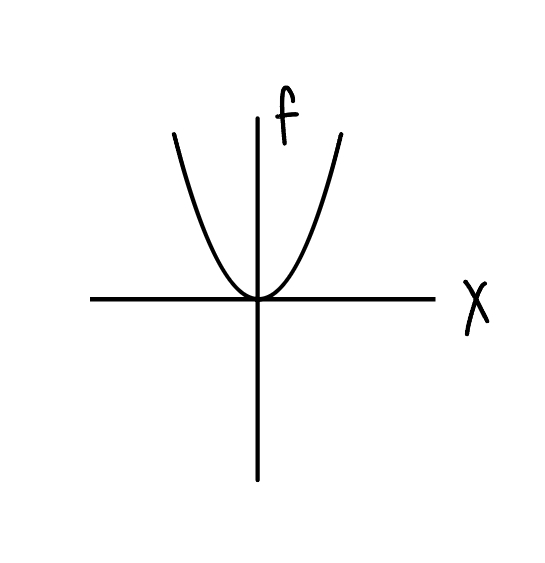
A description
“Square x.”
Not all curves are functions! f must uniquely map x. For example, the circle , or equivalently, is not a function because one value of x can map to multiple values of y. Graphically, this fails the “vertical line test”:
Common functions
Linear functions (lines)
where m is the slope and b is the y-intercept.
Power functions (“power law”)
where k is the prefactor and a is the power.
Polynomials
where n is the degree and is the coefficient of the i-th power of x. The polynomial is quadratic when , cubic when , and quartic when .
Exponential
where a is the base (, ). A special case is , Euler’s number (2.718...).
Logarithmic
where a is the base (, ). Two special cases are , which we call the natural logarithm , and , which we call the common logarithm, .
Trigonometric
Manipulating functions
shifts f left by a.
shifts f right by a.
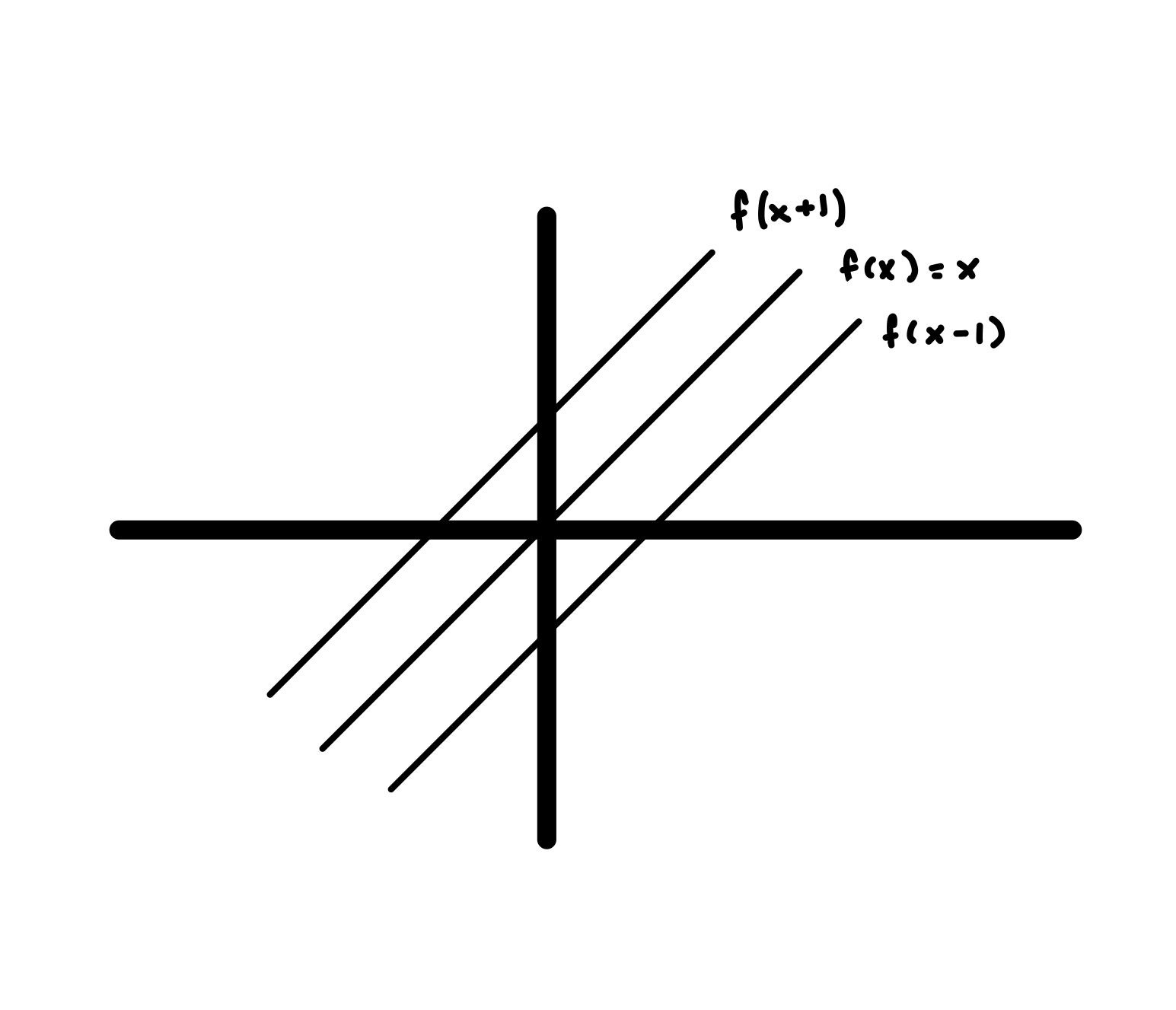
shifts f up by b.
shifts f down by b.
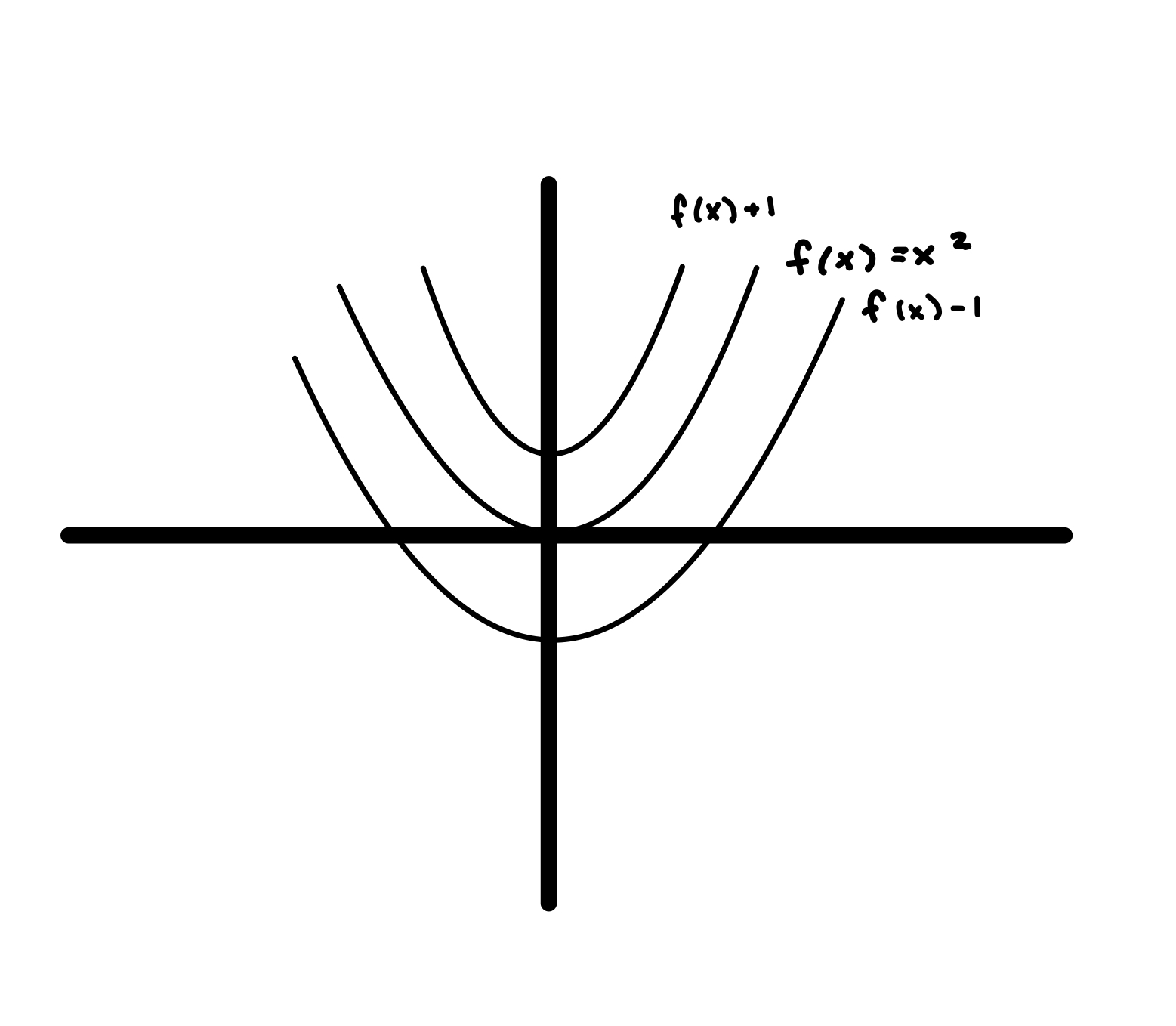
Scaling compresses f horizontally by c.
Scaling stretches f horizontally by c.
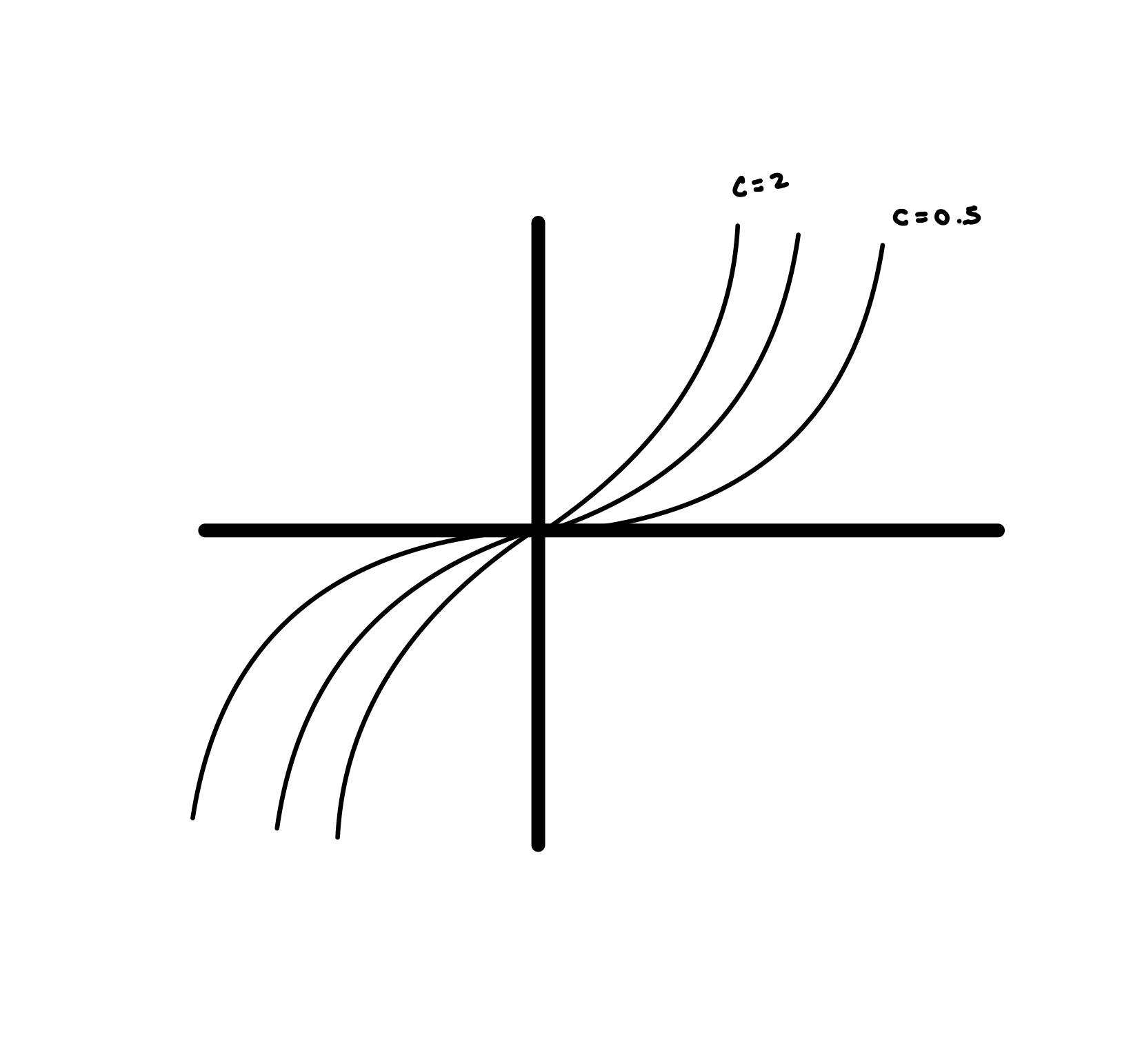
Scaling compresses f vertically by c.
Scaling streches f vertically by c.
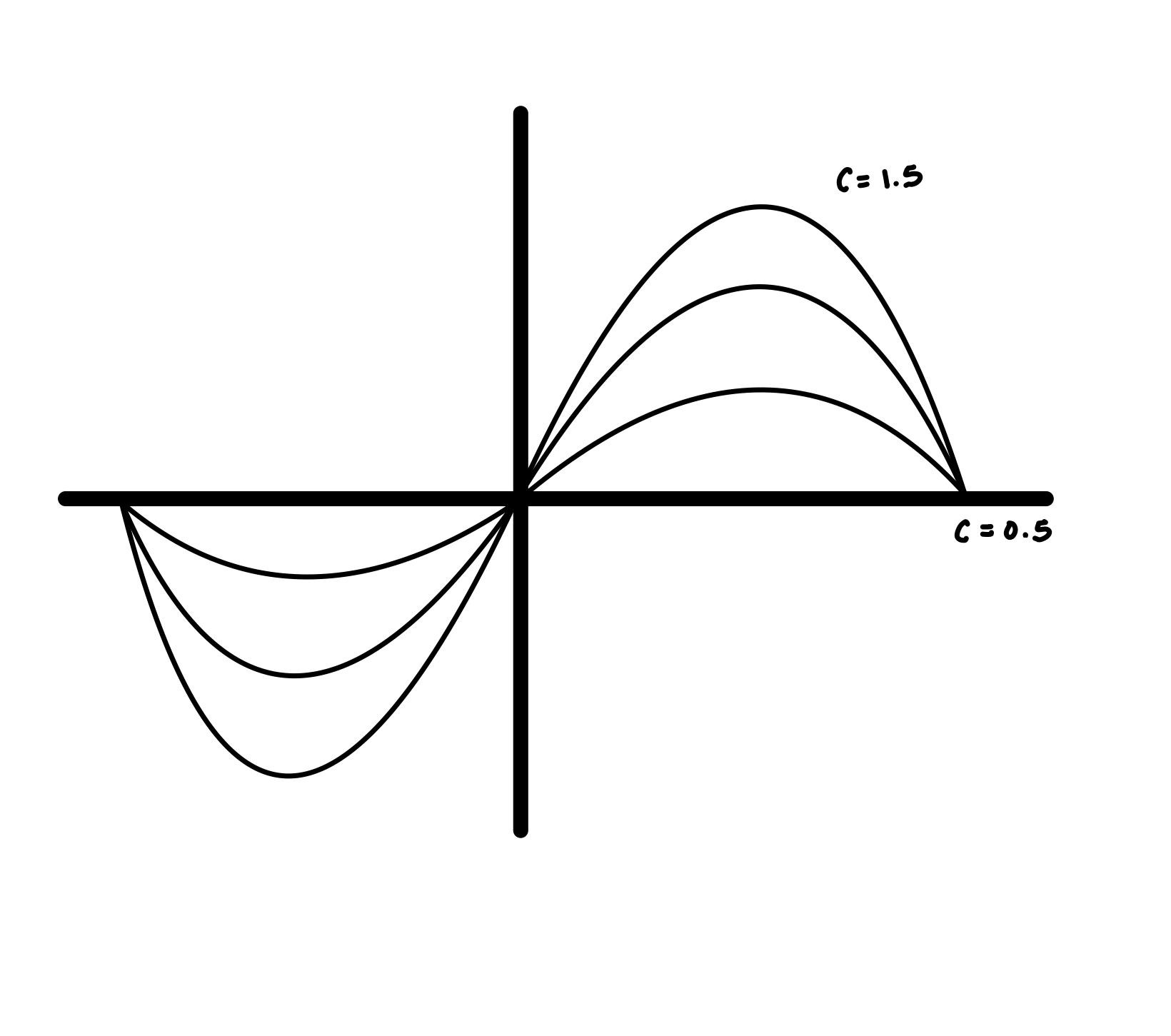
Trigonometric functions
The given unit circle has a triangle drawn within which represents how trigonometric functions are related to lengths and heights of the sides of right triangles.

The circle has a radius and is centered at (0,0). A point on the circle is defined by angle measured counterclockwise from the positive x-axis. Angles can be measured in degrees or radians:
The trigonometric functions describe how the coordinates of a point on the unit circle relate to the angle :
Each quadrant of the unit circle corresponds to a positive trigonometric function: All, Sine, Tangent, and Cosine.
Special angles
A right triangle with () and () angles has the following side lengths:
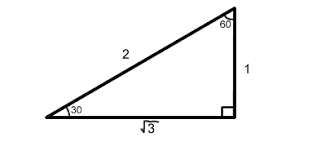
A right triangle with () angles has the following side lengths:
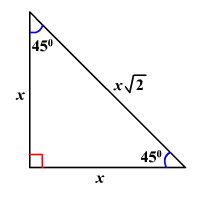
and so
What about angles greater than ? Take the angle of relative to the x-axis, then apply the sign based on which quadrant the angle falls in.
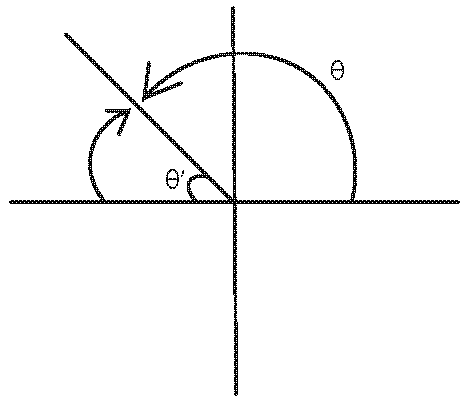
For example, if , then the angle relative to the x-axis is . Hence,
Physical meaning
In addition to their geometric significance, trigonometric functions typically represent physical waves.
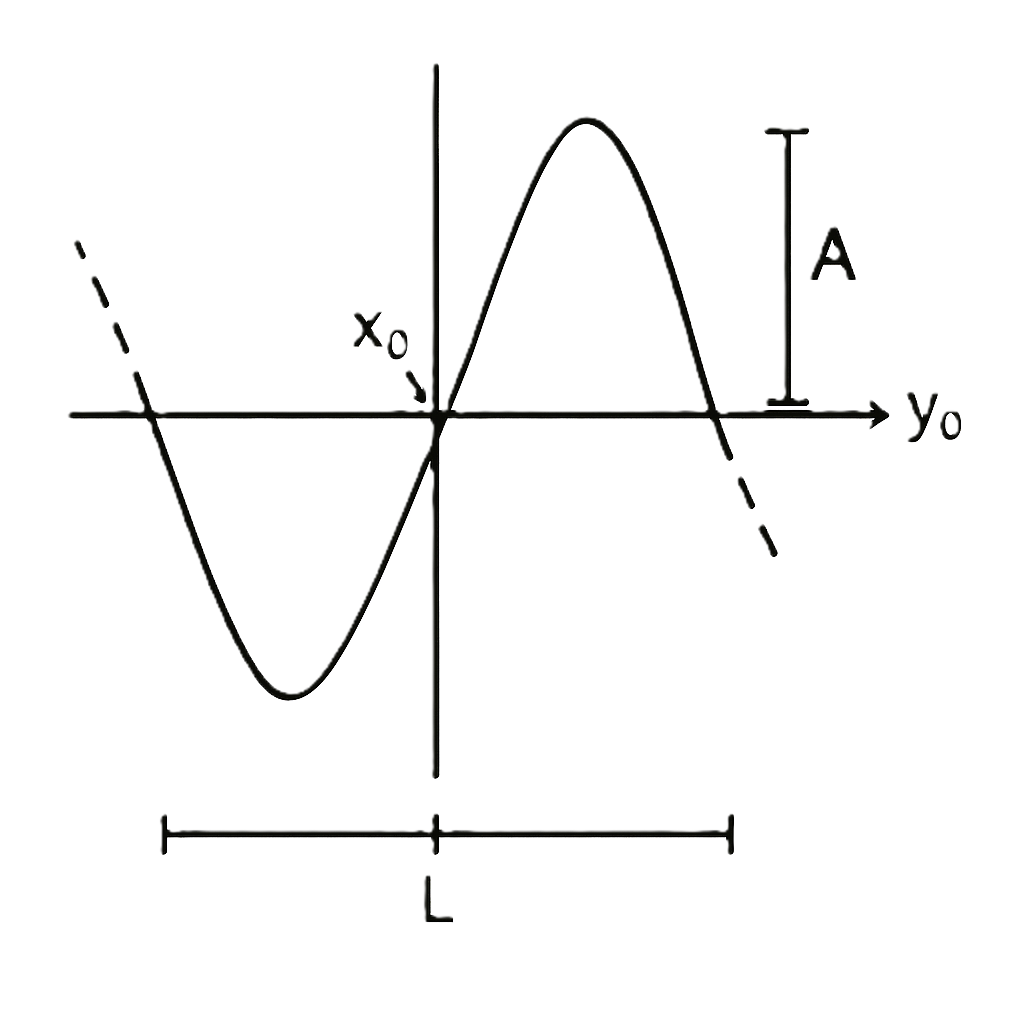
The properties of the wave can be encoded by manipulating the function.
where A is the amplitude of the wave, L is the period of the wave, is a horizontal (phase) shift, and is a vertical shift.